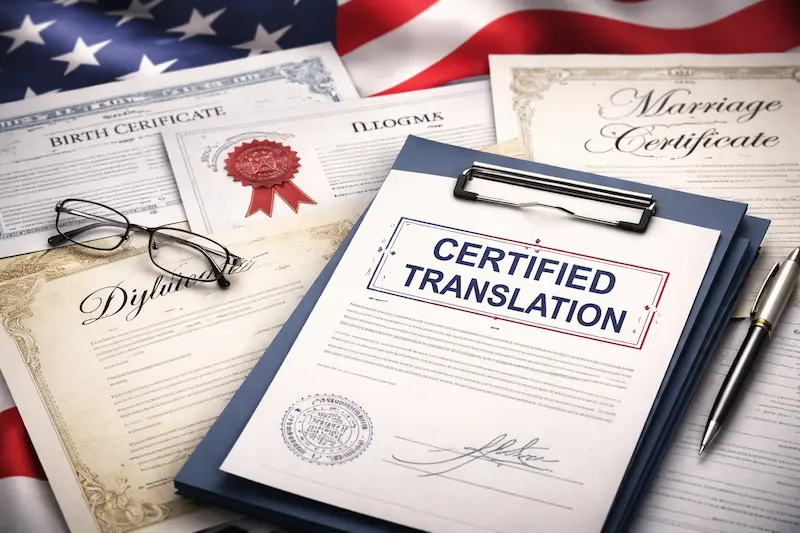
In Chicago, certified translations are rejected for a reason many people don’t expect.
Not because the translation is inaccurate.
Not because the document isn’t official.
But because the format doesn’t match how certification works in the United States.
That confusion is especially common among immigrants, international students, and professionals who bring documents from abroad and assume U.S. rules work the same way.
They don’t.
Why “certified translation” means something very specific in the U.S.
In the United States, certification has nothing to do with courts, embassies, or sworn translator status.
There is no federal registry of sworn translators.
There are no country-specific certification stamps.
What U.S. institutions care about is accountability.
A certified translation is considered valid when it includes:
- a complete, word-for-word English translation
- all visible elements from the original document, including stamps, seals, dates, and handwritten notes
- a signed statement confirming the translation is accurate
- clear identification of the translator or translation agency
This same format is used nationwide — by immigration authorities, universities, credential evaluators, employers, and licensing boards.
That’s why translations prepared under foreign rules are often rejected in the U.S., even when they were perfectly acceptable back home.
Why translations get rejected so often
In Chicago, most delays happen for practical reasons, not language mistakes.
The most common issues are surprisingly small:
- the certification page is missing
- a page, seal, or reverse side wasn’t translated
- names are spelled inconsistently across documents
- the original document was scanned poorly or cropped
From the reviewer’s perspective, these aren’t minor errors.
They make the translation incomplete — and incomplete translations aren’t accepted.
This is especially common in immigration and academic applications, where reviewers follow checklists rather than context.
When people in Chicago usually need certified translations
Chicago is a major immigration, academic, and professional hub, so certified translations are commonly required for a wide range of purposes.
Immigration cases often involve documents such as birth certificates, marriage or divorce records, police certificates, court decisions, and other civil records submitted with USCIS forms.
Universities and credential evaluators regularly require certified translations of diplomas, transcripts, grade reports, and enrollment or graduation letters. This applies to both local institutions and national evaluation agencies.
Employment and professional licensing add another layer. Regulated fields like healthcare, engineering, teaching, and law enforcement often require certified translations to verify foreign education or experience.
Across all of these situations, the format requirement stays the same — even though the institution changes.
Does the translator need to be in Chicago?
No.
This is another common misunderstanding.
Certified translations are accepted anywhere in the United States as long as they follow the correct U.S. format. The translator does not need to be physically located in Chicago, Illinois, or even the same state as the applicant.
What matters is how the translation is prepared and certified — not where the translator is based.
Timing: what people realistically expect
Most standard documents are completed within 24 to 48 hours when clear scans are provided.
Longer academic files can take more time due to formatting and layout requirements, but delays are rarely caused by the translation process itself.
What usually slows people down is having to redo a translation after it was rejected for format issues that could have been avoided.
Chicago doesn’t have special translation rules.
U.S. rules apply here — and they apply consistently.
Once you understand what “certified translation” actually means in the United States, the process becomes predictable. The key is not how official the document looks, but whether the translation meets the required certification format from the start.
If you’re preparing documents for immigration, education, or employment and want to see what a compliant U.S.-certified translation looks like in practice, this page explains the requirements clearly:
https://translation.center/chicago/certified-translation
Following the correct format from the beginning can save time, prevent rejections, and make the entire process much smoother.
Comentarios