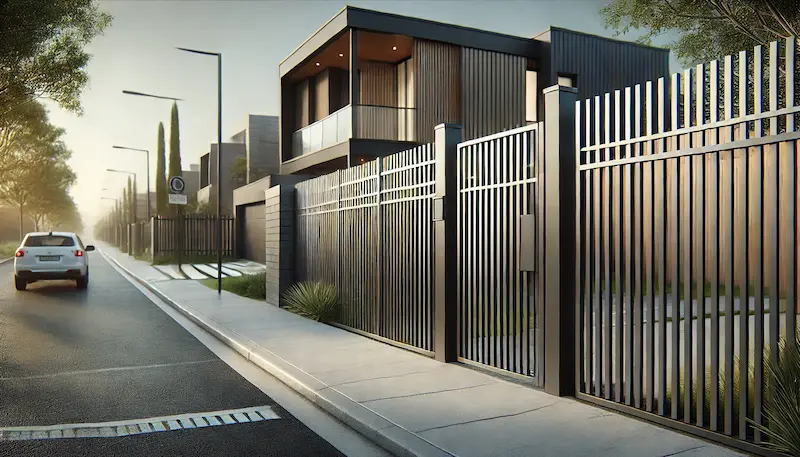
A fence is rarely just a boundary line. It shapes how a site feels from the street, how private outdoor areas are, and how clearly entry points are defined.
For readers comparing styles and use cases, Ironstyle steel fencing Perth outlines a mix of aesthetic directions—ranging from minimalist modern lines to more intricate classic patterns—alongside practical attributes such as durability, privacy, and custom fabrication.
When you think about fencing as part of the property’s overall layout—not an add-on—you can make decisions that hold up visually and functionally over time.
How design choices change what a fence does
Steel fencing is often discussed in terms of strength first, but design is what determines how that strength is experienced: openness vs. enclosure, street presence, and how much the boundary “disappears” into the architecture.
A useful starting point is to separate two questions:
- What does the fence need to achieve day to day (privacy, security, boundary clarity)?
- What visual language should it speak (modern minimalism, classic detail, or something in between)?
For a quick overview of the style range typically considered within steel fencing, see the examples and positioning around design.
Modern minimalism: clean lines and controlled openness
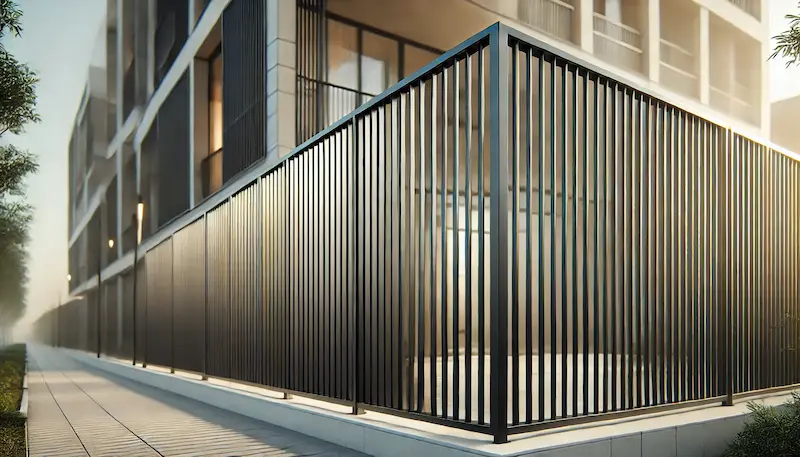
Minimalist steel fencing tends to rely on simple geometry and consistent repetition. The effect is usually calm and structured, which makes it a frequent match for contemporary façades.
In practical terms, minimalist layouts often suit:
- Front boundaries where the goal is definition without visual heaviness
- Side boundaries that should feel uniform and “quiet”
- Properties where landscaping and façade details are intended to remain visible
Classic and ornate patterns: detail as part of the frontage
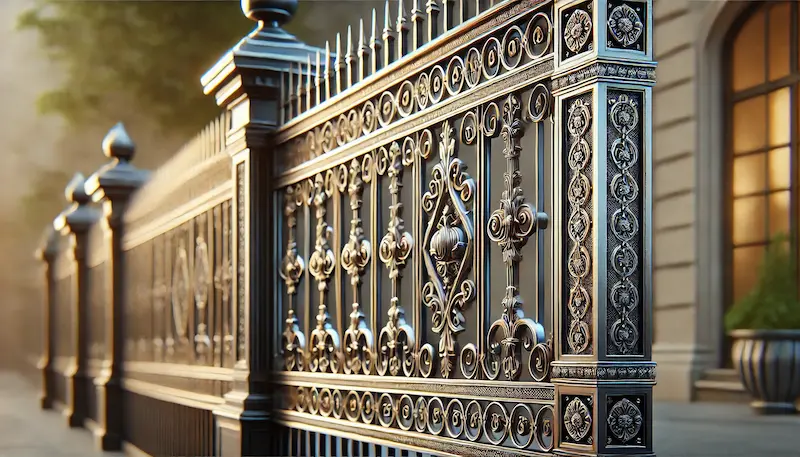
At the opposite end of the spectrum, steel fencing can lean into intricate patterns and decorative elements. This approach is often used when the fence is meant to read as a prominent part of the exterior composition rather than a purely functional edge.
More detailed patterns can work well when:
- The building already has traditional or heritage-style cues
- The frontage benefits from a stronger sense of formality
- The fence is intended to visually frame entry points
Matching the fence to architectural style
Rather than picking a style in isolation, it helps to observe the property’s “dominant lines”:
- If the building is defined by straight edges and minimal ornament, a simpler fence often looks intentional.
- If the exterior uses traditional detailing, a fence with more pattern can look more coherent.
This is less about trend and more about consistency—how the perimeter reads as part of the whole.
Practical benefits often associated with steel fencing
Beyond looks, steel fencing is often selected for properties that need a perimeter solution that holds its shape, appearance, and function over time.
Durability and resistance over time
Steel fencing is commonly positioned as a long-term choice because it is often fabricated from high-grade steel and described as resilient in demanding conditions, including resistance against rust and corrosion. The goal is a boundary that remains reliable and visually stable across seasons rather than degrading quickly.
Privacy and security as everyday functions
A fence has a daily job to do: create separation and reduce unwanted access. Steel fencing is frequently described as providing an added layer of privacy and security, acting as a physical barrier intended to deter intrusion while still allowing the property to present a considered exterior.
The practical takeaway is that “security” doesn’t necessarily mean turning a property into a sealed box. The spacing, height, and pattern density determine how open or private the boundary feels.
Custom-made fabrication for site-specific needs
One reason steel fencing remains popular is its flexibility at the fabrication stage. Custom-made options are often highlighted because each property’s needs differ: slope, frontage width, entry layout, and the desired balance between privacy and openness.
In other words, steel fencing is often treated as a made-to-fit element, not just a standard panel product.
Low-maintenance expectations
Steel tubular fence ranges are often described as designed with practicality in mind and requiring minimal maintenance, while maintaining aesthetic appeal with basic care. For many owners, that matters as much as style: the fence should look “finished” without demanding constant attention.
Where steel fencing is commonly applied
Steel fencing can be used across residential and commercial settings, but the best choice depends on what the perimeter must do.
Residential boundaries
In homes, steel fencing is often chosen to:
- Clarify the street-facing edge of the property
- Balance privacy with a sense of openness
- Support defined access points and entry sequences
Depending on the pattern and spacing, the same material can feel light and modern or more formal and traditional.
Commercial sites
For commercial properties, steel fencing is frequently linked to:
- Clear boundary definition
- Perimeter security needs
- A durable external finish that remains consistent over time
The emphasis is usually on reliability and function, with design used to ensure the boundary doesn’t look purely utilitarian.
A decision checklist that helps avoid mismatches
If you want a fence that stays coherent after the novelty wears off, it helps to make the criteria explicit.
Consider these questions before settling on a style:
- Is the primary goal privacy, security, or a clearer boundary line?
- Should the fence feel open, semi-open, or visually enclosed?
- Does the property call for minimalist modern lines or classic patterning?
- Is the fence meant to be a subtle background element or a prominent frontage feature?
- Do you need a solution that can be custom-made to fit site constraints?
By treating steel fencing as both a visual and practical system—rather than a single purchase decision—you can choose a design direction that supports everyday use while still fitting the architecture.
Comentarios